


BASS CAT
3.911.00 Reviews
App Specs
- Version
- 3.4
- Updated On
- License
- $2.49
- Downloads
- 10,000+
- Developer
- Melody Cats
- Categories
- Music
- Platform
- Android
Screenshots
 Analysis by AppCompare
Learning to read the bass clef can feel unnecessarily slow when every exercise is disconnected from the instrument you actually want to play. BASS CAT takes a narrower, more useful approach: it turns note recognition in the bass clef into a music game. I found that focus refreshing. Rather than trying to be a complete theory course, it concentrates on the quick visual response that beginners often struggle to build.
That narrow purpose is also the key to deciding whether it deserves a place on your phone or tablet. If you need repeated practice identifying low-register notes, this game has a clear job. If you want lessons on rhythm, scales, chords, ear training, or full sight-reading, it will feel limited almost immediately. My impression is that Melody Cats made a small practice tool, not an all-in-one music classroom, and it works best when treated that way.
How the game fits into bass-clef practice
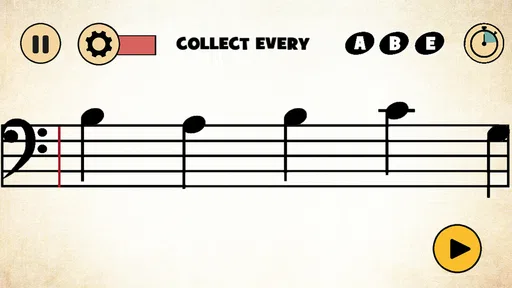
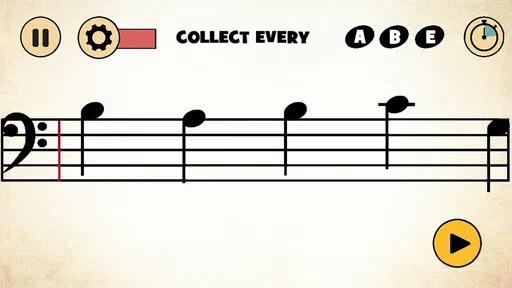
The central idea is simple: you look at a note written in the bass clef and work out its name quickly. That sounds basic, but speed matters. A student can eventually decode a note by counting lines and spaces, yet still lose the flow of a piano exercise because every symbol requires conscious calculation. Short, repeated game sessions are useful for moving recognition closer to an automatic response.
I would place it in the music-learning category rather than the entertainment-first side of mobile gaming. The game format gives the exercise a little pressure and makes repetition less dull, while the subject remains specific: identifying notes in the bass clef. That makes it especially relevant to piano learners, keyboard players, and anyone beginning theory who keeps confusing the lower staff with the treble staff.
The developer is Melody Cats, and the app has been available since August 29, 2012. Its current version is 3.4, and it runs on operating systems from version 10 onward. Those details suggest a long-running, focused product rather than a recently expanded learning platform. I would not choose it because I expect a modern course structure; I would choose it because its central exercise is easy to understand and easy to repeat.
What a useful practice session looks like
A realistic session does not need to replace your lesson or instrument time. I would use it before sitting at the piano, during a short break, or after working through sheet music. Start with a few rounds while saying each note name quietly, then repeat without speaking. The first pass reinforces the note; the second pass tests whether recognition is becoming faster instead of merely more deliberate.
One practical habit is to notice which neighboring notes cause hesitation. Beginners often know the middle of the staff but slow down near ledger lines or when moving between familiar positions. Rather than treating every mistake as equal, I would mentally group the troublesome notes and give them extra attention outside the game by locating them on the keyboard or staff paper. The app supplies repetition; your instrument supplies meaning.
Worth Reading Before You Choose

EA SPORTS FC Mobile 26 Is a Bigger Football Game, but It Takes Time

Flipboard Shows What News Apps Must Do Beyond the Feed

Switching to Android Auto Means Rethinking Your Driving Routine

Google Calendar Makes a Crowded Week Easier to Manage

Ludo King Makes the Most of the Minutes Between Plans

Baby Panda World Brings Quick Play to Modern Phones, but Its Game Library Feels Busy
Another useful workflow is to play a short bass-clef passage immediately after practicing. This exposes a weakness that a game alone can hide: recognizing isolated notes is not the same as following notes in musical context. If you can identify individual symbols but still pause during a simple piece, the game is helping with one layer of reading, not solving the entire sight-reading problem. That distinction prevents unrealistic expectations.
Why the focused design can help
The strongest part of the concept is its restraint. Many music apps try to cover notation, rhythm, theory, ear training, composing, and instrument technique in one package. That breadth can be useful, but it can also make a beginner unsure what to practice next. Here, the target is obvious. When the bass clef is the specific obstacle, opening a dedicated exercise removes some decision-making.
The game format may also make repetition easier to tolerate. Reading notes improves through exposure, and exposure can become tedious when it is presented as a worksheet every time. A quick interactive challenge gives the same basic skill a more active feel. I would still keep sessions short. Once attention drops, repeated guessing is less valuable than careful recognition, and no game mechanic can replace focused practice.
There is a subtle benefit for learners who rely too heavily on counting upward from a known note. Speed-based identification encourages you to recognize the visual position as a whole. That transition is important for playing smoothly. I would not expect it to happen after one sitting, but regular use can make the staff feel less like a code that must be translated symbol by symbol.
Where the limits become noticeable
The narrow scope is also the main limitation. A player who needs help with rhythm will have to practice that elsewhere. The same is true for hearing intervals, understanding key signatures, reading treble clef, learning chord symbols, or connecting notation to fingering. Even strong performance here would only show that one part of music reading is improving.
I would also avoid using it as the only resource for a child or adult who needs a guided curriculum. A teacher can explain why a note matters, correct posture, connect the staff to the keyboard, and adjust exercises when confusion appears. A focused game cannot provide that personal diagnosis. It is better as a supplement between lessons than as a substitute for instruction.
There is another trade-off between speed and understanding. If you rush to improve a score or finish a round, you may train quick guesses rather than reliable reading. My advice is to slow down whenever you miss a note, name it, find the same pitch on your instrument, and then continue. The best results will come from using the game as deliberate practice instead of treating every session as a reflex test.
Who is likely to get real value
This is a sensible match for a beginner who has already seen the bass clef but still needs frequent reminders. It can also suit a returning piano player who remembers basic notation but has lost fluency. In both cases, the value comes from convenience: a small exercise is easier to fit into a day than a full theory lesson.
It may be particularly helpful for someone whose right hand is comfortable with treble-clef material while the left-hand staff causes pauses. That imbalance is common in early piano study. A few focused rounds before left-hand practice can warm up visual recognition, making the first minutes at the keyboard less frustrating.
Parents should think about the learner’s temperament. A child who enjoys quick challenges may practice more willingly when the exercise feels like a game. A child who needs colorful explanations, musical stories, or a broad progression may find this too plain or too specialized. Since the content rating is Everyone, the subject is suitable for a general audience, but age suitability is not the same as teaching suitability.
More advanced musicians probably will not find enough depth here as a main training tool. Someone preparing for demanding sight-reading, theory exams, or professional work needs a broader routine with real scores, rhythm work, and ear training. The game could still serve as a fast warm-up, but I would not buy it expecting advanced progression.
Cost and the question of value
BASS CAT is a paid game priced at $2.49. That matters because the decision is not about whether to tolerate advertising or unlock a basic exercise after a free trial; it is about whether a focused bass-clef drill is worth a small one-time purchase to you. I appreciate that the price is easy to understand, but a narrow tool still needs to match a specific need before it becomes good value.
For a learner repeatedly making bass-clef mistakes, the purchase can make sense. The value is not in the amount of content promised by the price; it is in having a dedicated way to practice one stubborn skill whenever you have a spare moment. If that skill is currently slowing down your playing, a small specialized game may be more useful than a larger app that spreads attention across subjects you do not need.
On the other hand, I would skip the purchase if you are only curious about music theory or have not yet decided whether you enjoy reading notation. A teacher’s worksheet, a method book, or practice material you already own may be enough to test your interest. I would also think twice if your main goal is learning an instrument from the beginning, because this game does not replace the broader explanations and guided exercises that a complete beginner needs.
Compared with a general music-learning app, the trade-off is straightforward. A broader alternative usually offers more topics and a clearer course path, but may give less concentrated repetition of bass-clef notes. Compared with paper flashcards, this game is likely to feel more interactive, while cards make it easier to control exactly which notes appear and to practice away from a screen. Compared with simply reading piano music, it isolates recognition, which is useful for diagnosis but less musical on its own.
Small techniques that make the purchase more worthwhile
Use it in a three-step loop rather than opening it randomly. First, play a short round and notice the notes that slow you down. Next, locate those pitches on the keyboard or another instrument. Finally, return to a real bass-clef line and read it without stopping. This turns an isolated drill into a bridge between visual recognition and actual playing.
You can also use alternating speeds as a self-check. Begin carefully enough to avoid guessing, then try a faster round only after the note positions feel familiar. If accuracy drops sharply, that is useful information: you may recognize the notes but have not yet made the response automatic. In that case, more speed is not the answer; shorter, accurate repetitions are.
A third approach is to practice before, rather than after, a task that exposes the weakness. If left-hand reading is the problem, spend a few minutes with the game before a piano exercise written mainly in the bass clef. If you are studying a new piece, use it as a visual warm-up, then check whether the opening measures feel less mentally crowded. This makes the app part of a routine instead of an isolated diversion.
Finally, keep a boundary around what the game can prove. A good result means your note identification is improving in the exercise. It does not automatically mean your rhythm, fingering, musical phrasing, or sight-reading has improved. Measuring those skills through actual music is more honest and will help you decide whether continued use is paying off.
My recommendation for different learners
I would recommend it to a piano beginner who specifically needs bass-clef repetition and wants a compact practice option. I would also recommend it to a lapsed player who wants to rebuild basic note fluency without committing to a full course. For those users, the focused design is a strength, and the paid price can be reasonable when the exercise addresses a daily frustration.
I would be cautious recommending it to someone seeking a complete music curriculum. It is not the right first purchase if you need lessons that explain notation from the ground up, cover multiple clefs, or connect theory with technique. In that situation, choose a broader learning resource first and consider this only as a supplementary drill later.
My overall view is positive but deliberately narrow. BASS CAT is worth considering when bass-clef recognition is the exact problem you want to practice. Its usefulness comes from repetition, focus, and convenience—not from offering every part of musical education. The $2.49 price is easiest to justify when you already know that this specific weakness is holding you back.
With an average rating of 3.9 from around 84 ratings and over 10 thousand installs, it has attracted a modest audience without looking like a universal solution for every music learner. I would treat those figures as context, not a reason to buy. My buy-or-skip verdict is simple: buy it if you want a dedicated bass-clef drill to support piano or theory practice; skip it if you need broad lessons, advanced musicianship training, or a complete replacement for a teacher and real sheet music.
Pros
- Fun rhythm gameplay built around bass-heavy music tracks.
- Simple controls make it easy to start playing quickly.
- Short levels suit quick gaming sessions on mobile.
- Stylish visuals complement the energetic musical atmosphere.
- Progression encourages repeated play and score improvement.
Cons
- The music selection may feel limited after extended play.
- Some levels can become repetitive once the mechanics are familiar.
- Timing-based gameplay may frustrate players with slower reactions.
- Difficulty can increase sharply in later stages.
- Performance may vary on older Android or iOS devices.
FAQs for BASS CAT
What is BASS CAT and how does the game work?
BASS CAT is a rhythm-based music game focused on tapping, timing, and musical performance. After installing it, players follow beats or notes on the screen and interact with them as songs progress. The main challenge is maintaining accurate timing while the music becomes faster or more demanding. It is designed for short sessions, but improving scores and mastering tracks can make it surprisingly replayable.
Is BASS CAT free to download and play?
BASS CAT can generally be downloaded without an upfront purchase, although the exact monetization system may depend on the platform and version available in your region. Some content, upgrades, songs, visual items, or other features may require optional purchases. Before downloading, check the store listing for current pricing, in-app purchase details, and whether advertisements are included in the version offered for your device.
Does BASS CAT require an internet connection?
The internet requirements can vary depending on the version and the features you use. Basic gameplay may be available offline after the necessary files have been installed, but online connectivity could be needed for downloading songs, receiving updates, synchronizing progress, viewing advertisements, or accessing any online rankings. It is best to launch the game once while connected before traveling or attempting to play without mobile data.
Is BASS CAT suitable for children and casual players?
BASS CAT is approachable for casual players because its core controls are usually simple to understand, while accurate timing provides a challenge for more experienced users. However, parents should review the store rating, advertising, in-app purchases, and any external links before allowing children to play. Music-game sessions can also become repetitive or require quick reactions, so younger players may benefit from supervised and limited playtime.
What devices are compatible with BASS CAT, and does it need much storage?
Compatibility depends on the current Android or iOS release, operating-system requirements, and whether your device meets the developer’s supported specifications. The initial download may be relatively small, but additional music, graphics, cached files, and updates can increase storage usage over time. Check the official app-store listing before installing, keep some free space available, and update your operating system if the game does not appear as compatible.


